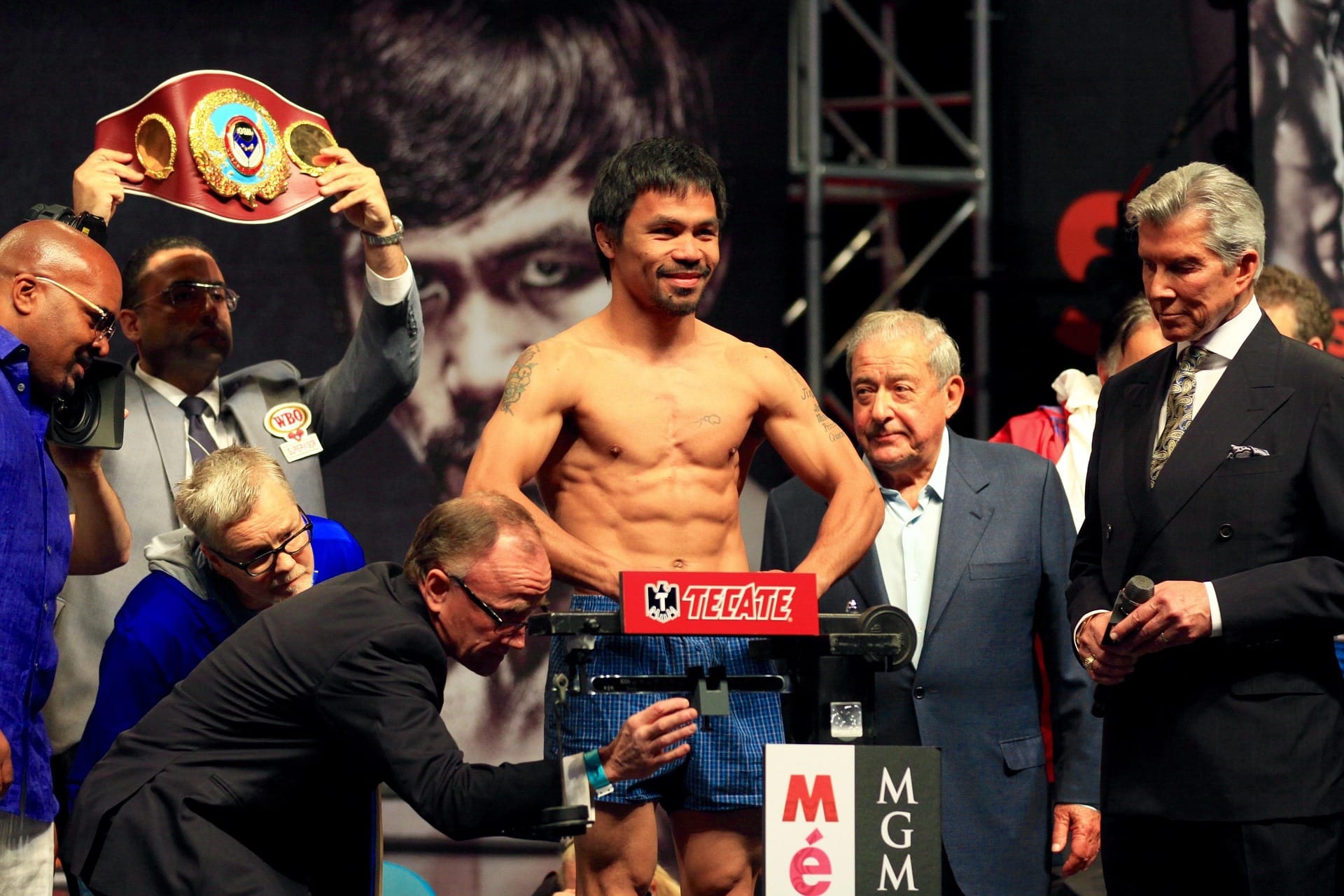
Manny Pacquiao's Comeback Lessons: How to Bounce Back in Your Career (2026)
🥊 BREAKING — Feb 23, 2026: Pacquiao vs. Mayweather 2 officially confirmed · September 19, 2026 · The Sphere, Las Vegas · Netflix
This morning, Netflix made it official: Manny Pacquiao and Floyd Mayweather will fight again — September 19, 2026, at The Sphere in Las Vegas. Pac-Man is 47 years old. He already fought and drew this year. He ran for the Philippine presidency, lost, and still came back to the ring.
Most people would have stayed retired. Most people would have called it a full career, taken the legend status, and moved on. Not Pacquiao.
And here's what struck me reading the news this morning: Manny Pacquiao's story is not just a boxing story. It's the blueprint for every professional who has ever felt like their best days were behind them.
Whether you were laid off in a tech downturn, left a career that no longer fit, or simply lost your edge after years of grinding — Pacquiao's comeback has something to say to you. Not in motivational-poster platitudes. In specific, actionable lessons about how real comebacks are actually built.
| Stat | Figure |
|---|---|
| Pacquiao's age for the rematch | 47 |
| Years since Mayweather fight 1 | 11 |
| World titles across weight classes | 8 |
| Career record | 62–8–3 |
Table of Contents
- The Anatomy of Every Real Comeback
- Pacquiao's Career as a Professional Reinvention Map
- What Every Great Career Comeback Has in Common
- How to Write a Resume That Tells a Comeback Story
- 7 Pacquiao-Inspired Lessons for Your Professional Rebound
- FAQs: Career Comebacks
- Your Next Round Starts Now
The Anatomy of Every Real Comeback
Here's what most career advice misses about comebacks: they don't start with motivation. They start with a moment of honest reckoning.
Pacquiao didn't just wake up one day and decide to fight Mayweather again because he was bored. He'd been told he was too old, too political, too distracted. He ran for Senate. He ran for President. He lost. He came back to boxing after that loss and fought Mario Barrios — the WBC welterweight champion — to a draw at age 46. He earned this rematch on merit, not nostalgia.
That's a pattern. Great career comebacks don't happen because someone felt inspired. They happen because someone looked clearly at what they still had, what the market needed, and found the intersection — then worked relentlessly toward it.
"The fans have waited long enough — they deserve this rematch, and it will be even bigger." — Manny Pacquiao, February 23, 2026
Pacquiao didn't frame his comeback as desperation. He framed it as delivery on a promise — to himself, to his fans, to his country. That reframe is everything. The most effective career comebacks share this same quality: they aren't presented as "I need a job." They're presented as "I have something to offer that the world isn't done with yet."
Pacquiao's Career as a Professional Reinvention Map
Before we talk about your career, let's look at just how many times Manny Pacquiao has reinvented himself. This isn't a guy who had one good run. This is someone who has continuously adapted across five decades of professional boxing — and life outside of it.
1995 · Age 16 — The Unknown
Turns pro at 106 lbs with borrowed gloves. Zero resources, maximum hunger. Lied about his weight to get fights. 💼 Career parallel: The underqualified applicant who walks in anyway.
2001 · Age 22 — The Breakthrough
Defeats Marco Antonio Barrera, stuns the world. Nobody gave him a chance. He won by TKO in round 11 and permanently reframed his trajectory. 💼 Career parallel: The project that makes people finally take you seriously.
2009 · Age 30 — The Peak
Named Fighter of the Decade. Eight-division champion. Moved up through weight class after weight class — adapting his style, strategy, and game plan each time. 💼 Career parallel: The industry pivot that pays off spectacularly.
2015 · Age 36 — The Setback
Loses to Mayweather in "The Fight of the Century." A painful, public loss on the world's biggest stage. But he competed. He showed up on merit. 💼 Career parallel: The promotion you didn't get. The pitch you lost.
2022–2025 · Age 43–46 — The Political Chapter
Ran for president of the Philippines, lost. Lost the 2025 Senate race. Returned to boxing within months — drawing against the WBC champion. 💼 Career parallel: The failed startup, the reorg that eliminated your role, the acquisition that changed everything.
2026 · Age 47 — The Rematch
Mayweather II at The Sphere on Netflix. Not a retirement tour. Not an exhibition. A professional fight against the man who beat him eleven years ago — with unfinished business on the line. 💼 Career parallel: The comeback that makes everyone ask, "How is he still doing this?"
What Every Great Career Comeback Has in Common
After studying comeback stories across industries — executives fired and rebuilt, athletes returning after injury, entrepreneurs who failed publicly and started again — three constants appear every single time.
🥊 Round 1: Ruthless Inventory, Not Just Motivation
Before Pacquiao agreed to fight Barrios last year, he spent months in rigorous training assessment — testing what his body could still do, not what he wished it could. The best career comebacks start the same way: a clear-eyed inventory of what skills still have market value, what needs updating, and what gaps exist.
Not "I used to be great." But "What am I great at right now, and who needs it?"
🥊 Round 2: Adaptation, Not Just Perseverance
Pacquiao didn't try to fight at 47 the way he fought at 27. He adapted — smarter combinations, strategic positioning over raw speed. Career comebacks that fail are ones where someone tries to pick up exactly where they left off. The market moves. Your industry changes.
The most successful comeback professionals ask "What's the modern version of what I do well?" not "How do I get back to what I was doing before?"
🥊 Round 3: A Reframe, Not an Explanation
Nobody asks Pacquiao to justify fighting again. He frames it as unfinished business, as national pride, as a gift to his fans. Career gaps, layoffs, and industry switches don't need lengthy explanations. They need powerful reframes.
"I left finance to run a startup, which taught me more about risk management in 18 months than 5 years on a trading desk" is not an excuse. It's a competitive advantage. Learn to tell it that way.
How to Write a Resume That Tells a Comeback Story
The resume is where most comeback professionals stumble. They either over-explain the gap, or they hide it so aggressively it creates suspicion. Here's the Pacquiao approach: don't hide the gap. Make it part of the story.
Pacquiao doesn't pretend he wasn't a politician for three years. He leads with it. His professional reinvention became a feature of his public identity, not a bug. Your resume can do the same.
🎯 Tip 1: Use a "Career Highlights" Section at the Top
Instead of starting with a chronological list that highlights gaps, open with a 3–4 line summary of your career's greatest hits. This sets the frame before a hiring manager starts looking for problems.
Example: "Operated at VP level across two industries (fintech and edtech), led teams through two acquisitions, and launched 3 products from 0→$2M ARR. Currently returning to full-time product leadership after founding and exiting an early-stage startup."
🔄 Tip 2: Name the Transition Directly — and Frame It as Upskilling
Gaps read as passive. Transitions read as active. Rename your career change from a gap to a deliberate move with measurable outcomes.
| ❌ Instead of | ✅ Use |
|---|---|
| "2022–2024: Career break" | "2022–2024: Independent consulting & industry transition — Advised 4 early-stage SaaS companies on GTM strategy while transitioning from enterprise sales to product management. Completed Google PM certification and shipped 2 freelance product features." |
📊 Tip 3: Quantify Your Comeback Milestones
Numbers neutralize narrative doubt. When Pacquiao came back and fought Barrios to a draw — that result spoke louder than any press release. Your resume needs equivalent proof points.
| ❌ Weak | ✅ Strong |
|---|---|
| "Returned to marketing after 2-year gap in a different industry" | "Re-entered marketing after 2 years in operations; within 90 days, led rebrand that increased inbound leads by 34%" |
🧠 Tip 4: Build a "Cross-Industry Advantage" Statement
Pacquiao's ability to compete across eight weight classes is unusual. So is your cross-industry experience. Hiring managers don't always connect those dots — you have to do it for them.
Example: "Background spanning healthcare operations and B2B SaaS gives me an unusual ability to translate clinical workflow needs into product requirements — a skill most pure-tech PMs simply don't have."
💬 Tip 5: Prepare Your 60-Second "Comeback Narrative"
You will be asked about the gap or transition. Don't be defensive. Prepare a concise version that's confident, forward-facing, and ends on what you bring because of the experience — not despite it.
Example: "After my company was acquired, I spent 18 months learning the customer success side of the business — a gap I'd always had as a PM. I came back with a much deeper understanding of retention that I'm genuinely excited to apply."
7 Pacquiao-Inspired Lessons for Your Professional Rebound
These aren't motivational quotes. These are specific behavioral principles Pacquiao has demonstrated across 30 years in a brutally competitive field — applied to the equally competitive arena of professional life.
01. Move Up the Weight Class Pacquiao won titles in 8 divisions by being willing to compete at a higher level even when the odds shifted. Don't settle for the role you had. Use the comeback to aim higher.
02. Your Record Still Counts Pacquiao is 62-8-3. The wins don't disappear because of the losses. Your career accomplishments are permanent. List them. Own them. They're yours.
03. Choose the Right Opponent Pacquiao didn't fight just anyone to prove himself — he fought the WBC champion first. Be selective about your comeback opportunities. Not every offer is the right one.
04. Dedicate It to Something Bigger Pacquiao fights for the Philippines. He says it before every fight. Purpose sustains you through the long middle of a comeback when motivation alone runs dry.
05. One Loss Doesn't Define You Pacquiao lost the Philippine presidential election. He came back to boxing within months. A setback in one domain doesn't define your capability everywhere else.
06. Train Like You're Trying to Win Comebacks aren't performed — they're prepared for, in private, before anyone's watching. Rebuild your skills, update your knowledge, and show up ready — not just willing.
07. Unfinished Business Is a Strategy Pacquiao explicitly cited unfinished business as his reason for the rematch. In your career, "I have something left to prove" is not just emotionally true — it's strategically useful. It means you're hungry, focused, and specific about what you want to achieve next. That specificity is attractive to employers, clients, and partners.
FAQs: Career Comebacks
How do I explain a 2+ year career gap in an interview? Frame it as a deliberate investment, not an absence. Identify what you learned, built, or navigated during that period — even if it wasn't traditional work. Be specific ("I cared for an ill parent while completing an online data science certification") rather than vague ("I took time off to recharge"). Specificity projects confidence; vagueness creates doubt.
Is it too late to switch industries at 40 or 50? Pacquiao is still competing professionally at 47 in one of the most physically demanding sports in the world. Industry switches at 40 or 50 are not only possible — they're often advantages. You bring pattern recognition, stakeholder management skills, and institutional wisdom that 28-year-olds with "directly relevant" experience simply don't have. The key is translating those assets into the language of the new industry quickly and clearly.
What's the fastest way to rebuild professional credibility after a setback? Do visible work quickly. Write about your field. Speak at an event. Publish something. Take on a consulting engagement even at a reduced rate. Credibility is rebuilt through evidence — and evidence needs an audience. Pacquiao didn't rebuild his credibility by training in a bunker. He fought publicly, took the draw against Barrios, and let the result speak.
How do I handle the emotional difficulty of a career comeback? Acknowledge that the middle of a comeback — after the initial energy and before the results — is genuinely hard. There's no shame in the time it takes to rebuild your foundation. What matters is not confusing preparation with stagnation. Document your progress even when the external markers haven't caught up yet.
What resume format works best for career transitions? A hybrid format — opening with a skills-and-highlights summary, followed by a reverse-chronological experience section — works best. The summary lets you control the frame before someone reads your timeline. The chronological section maintains credibility. Avoid pure functional resumes, which hiring managers often interpret as an attempt to hide something.
Your Next Round Starts Now
Manny Pacquiao didn't become a legend by having a perfect career. He became a legend by being the person who kept showing up — through eight weight classes, through political defeats, through a loss on the world's biggest stage, and now through a rematch at 47 that nobody saw coming.
The world doesn't always reward the most talented. It rewards the most persistent, the most adaptable, and the ones who are still willing to step into the ring when everyone else thinks the story is over.
Your career comeback isn't the end of your story. It might be the best chapter yet.
Update the resume. Reframe the narrative. Find your unfinished business. And step back into the ring.